DTM Primer Sealer: 4:1:1 or 4:1:2? (Valspar DTM2004, by the Sheet)
DTM primer sealer: Valspar's DTM2004 is a direct-to-metal primer — onto steel, aluminum or galvanized, properly cleaned and sanded — and the same can is the sealer. The gallon's own label says "DTM Surfacer/Sealer". Valspar's data sheet settles it with one digit: 4:1:1 by volume (4 parts DTM2004, 1 part DTMA activator, 1 part reducer) is the primer surfacer; 4:1:2 is the primer sealer. That one extra part of reducer changes everything after it: 1 to 3 medium wet coats become 1 to 2, flash drops from 10–15 minutes to 5–10, solids by volume go from 40–50% to 30–40%, and only the sealer can be topcoated without sanding, 8 hours max.
In this video
- 0:00 DTM primer sealer: the answer
- 0:20 The sheet is on the product page
- 0:30 The sheet: what DTM2004 is
- 0:56 The component list names it
- 1:06 Surfacer vs sealer: 4:1:1 or 4:1:2
- 1:51 The mix
- 1:54 Mixing ratio, from the sheet
- 2:23 Pot life, and the additives
- 2:34 Mixed: two to three hours
- 2:42 What goes in the cup
- 2:53 On the metal
- 2:56 Surface prep, by the sheet
- 3:03 155 or 170, wiped dry
- 3:13 P320, and P180 on filler
- 3:22 What it goes on
- 3:33 Gun setup, from page two
- 3:54 Coats, and the one temperature
- 4:04 Sealer: flash dull between coats
- 4:15 The clock
- 4:18 Flash, sand and topcoat times
- 4:44 The 8-hour window
- 4:59 Five mistakes
- 5:25 Where to get it, and the sheet
- 5:57 Sealed. Now the colour.
Shop what's in the video
- Valspar DTM2004 gallon (the TDS button is on the page)
- Valspar DTMA activator
- Valspar LVBM100 medium reducer
- All primers
Good to know
- Every number in this video comes from Valspar's own technical data sheet for DTM2004 (revised 8 November 2013). It's the TDS button on the product page; your product's sheet comes first, and so does its safety data sheet
- The sheet says DTM2004 contains no isocyanates. That is not a reason to skip protection: it's a 2K primer. A properly fitted respirator, gloves, eye protection and real ventilation, every time.
- Which reducer family you use decides which local air-quality rule the mix meets. The sheet lists them; check your local rules before you spray.
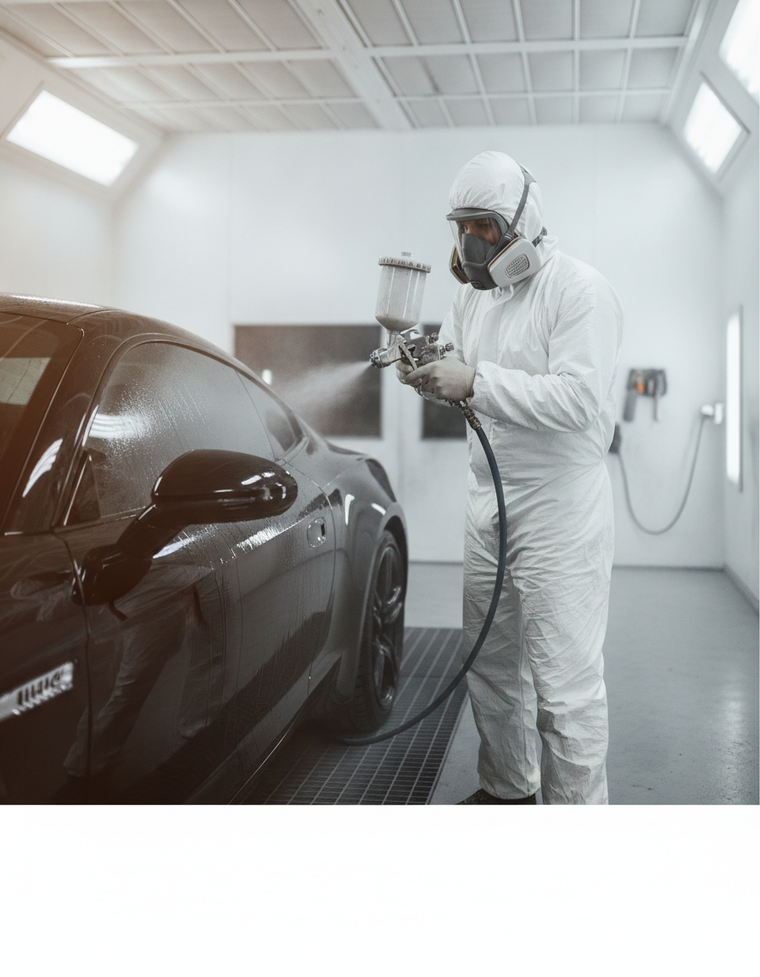
- The spraying, stirring and sanding shots are AI-generated video (LTX-2.5), labelled on screen, not a real repair. The sheet and the products are real, and AutofxMart sells them.
- Sealed? Find your paint, mixed to your car's code
Transcript
DTM primer sealer: the answer DTM primer sealer: Valspar's DTM2004 is a direct-to-metal primer, and the same can is also the sealer. Four to one to one is the primer surfacer. Four to one to two is the sealer: one more part of reducer, and everything after it changes.
The sheet is on the product page Every number here is from Valspar's own data sheet, and that sheet is now on the product page at autofxmart.com, link below.
The sheet: what DTM2004 is This is the sheet: two pages, revised in 2013. DTM2004, it says, is a hybrid of epoxy and acrylic polymers: excellent adhesion, good corrosion resistance, productive dry times and easy sanding. And, in the sheet's own words, it contains no isocyanates. It's still a two-part primer with an activator, so the respirator stays on.
The component list names it And look how the component list names the gallon: DTM Surfacer, slash, Sealer, gray. The label on the gallon says it too.
Surfacer vs sealer: 4:1:1 or 4:1:2 Side by side. One part reducer: the primer surfacer. Two parts: the sealer. The surfacer goes on in one to three medium wet coats. The sealer, one to two, and you let it flash dull between them. Flash time drops from ten to fifteen minutes, to five to ten. And here's the one people miss. With Valspar's one-seventy series reducers, the surfacer is forty to fifty percent solids by volume. The sealer: thirty to forty. One more part of reducer is a thinner film. The sheet even files them under two names: primer surfacer, primer sealer. So: building and blocking? Four to one to one. Sealing before colour? Four to one to two.
The mix First, the mix.
Mixing ratio, from the sheet Section two, by volume. As a primer surfacer: four parts primer, one part DTMA activator, one part reducer. As a primer sealer: the same, with two parts reducer. The activator is DTMA, one part either way. The sheet also lists the reducers, fast, medium and slow, in three families. Which family you use decides which local air rule the mix meets, so the sheet says to check yours.
Pot life, and the additives Once it's mixed, you have two to three hours at seventy-seven degrees. And section five is short: accelerator, do not use. Flex additive, not required.
Mixed: two to three hours Four to one to one, or four to one to two. Stir it in.
What goes in the cup So the cup is three cans: the DTM2004 gallon, the DTMA activator the sheet names for it, and a reducer, one part or two.
On the metal Now, on the metal.
Surface prep, by the sheet Section six is the prep. Wash with mild detergent and water, rinse, dry.
155 or 170, wiped dry Wipe it with 155 Surface Cleaner on steel, or 170 Aqua Clean on steel or aluminum, and wipe it dry before it flashes.
P320, and P180 on filler Sand and featheredge with P320 grit paper, and body filler with P180. Then clean it again, the same way.
What it goes on It goes on steel, aluminum, galvanized and sandblasted steel, and on fiberglass, SMC, e-coat and OEM finish, cleaned and sanded.
Gun setup, from page two Page two sets the gun. HVLP gravity feed: a one point four to one point eight tip, at twenty to thirty psi. A conventional gravity gun: 1.6 to 2.0, at thirty to thirty-five. Siphon feed: 1.8 to 2.0, at thirty to forty.
Coats, and the one temperature The surfacer goes on in one to three medium wet coats, the sealer in one to two. And never on a surface below fifty degrees.
Sealer: flash dull between coats As a sealer, the sheet says one more thing. Let it flash dull between coats. Five to ten minutes.
The clock And then, the clock.
Flash, sand and topcoat times Section eleven, air dry at seventy-seven degrees. The surfacer sands at sixty to ninety minutes. The sealer, you nib sand at twenty. To topcoat: thirty minutes for the surfacer, twenty to thirty for the sealer. And the sheet's footnote: reduction may speed up the flash. Now the bottom row. To topcoat without sanding, the surfacer says N A. The sealer says eight hours, max.
The 8-hour window That's what the sealer is for. Inside eight hours you take out a dust nib and go to colour, no sanding the panel. Past eight hours you're outside the sheet: sand it first. The surfacer never had that window.
Five mistakes Five mistakes. Expecting the sealer to fill: thirty to forty percent solids, one or two coats. That's the surfacer's job. Painting the sealer past eight hours without sanding. Adding accelerator: the sheet says, do not use. Spraying a panel below fifty degrees. And letting the cleaner dry by itself: wipe it off with a clean cloth while it's still wet, before you sand and after.
Where to get it, and the sheet Everything here is at autofxmart.com: the DTM2004 gallon, and the DTMA activator on its own page. And the sheet I just read is on the product page now: that TDS button. The reducers are there too. One more thing before you spray. No isocyanates is not no protection: it's an activated two-part primer. Read Valspar's safety data sheet, and wear a respirator, gloves and eye protection, with real ventilation.
Sealed. Now the colour. Once it's sealed, find your colour, mixed to your car's code, at autofxmart.com. Whatever primer is on your shelf, its mixing box decides what it is. Go and read it. Next on this channel: when you can tape, sand and buff, from a booth bake to a garage air-dry. Subscribe so you don't miss it.
AutofxMart: paint mixed to the code and body shop supplies, shipped from South San Francisco. Video by Upshift.